
An in-depth guide to experiencing the world’s largest intact volcanic caldera through the unmatched intimacy and privilege of a private safari
Introduction
There are places on Earth that carry the weight of superlatives effortlessly — places so extraordinary that language struggles to contain them. Ngorongoro Crater Private safari is one such place. A collapsed volcanic caldera stretching 19 kilometres across and plunging 600 metres deep, it cradles an entire self-contained ecosystem within its ancient walls: grasslands, forests, swamps, lakes, and rivers, all teeming with one of the densest concentrations of wildlife found anywhere on the African continent.
For decades, Ngorongoro has drawn visitors from every corner of the world, and its reputation as one of Africa’s premier safari destinations is wholly deserved. But there is a profound difference between experiencing this wonder as part of a crowded convoy of minibuses and encountering it through the lens of a private safari — with a dedicated vehicle, an expert guide, flexible itineraries, and access to experiences that the standard tourist circuit rarely offers.
A private Ngorongoro Crater safari is not simply a more comfortable version of the same experience. It is a fundamentally different encounter with one of the natural world’s most remarkable places — more intimate, more responsive, more unhurried, and ultimately more transformative.
The Ngorongoro Crater: A World Within a World
Ngorongoro Crater private safari was formed approximately two to three million years ago when a massive volcano collapsed inward upon itself, creating what geologists call a caldera. Today, it is the largest intact and unflooded volcanic caldera on Earth, a designation that barely hints at the ecological miracle contained within its walls.
The crater floor covers roughly 260 square kilometres and sits at an altitude of approximately 1,800 metres above sea level. The rim rises to over 2,400 metres, creating a dramatic natural amphitheatre that generates its own microclimate — mornings frequently arrive shrouded in mist, burning off by mid-morning to reveal the panorama below in sharp, golden clarity.
Within this enclosed world lives an astonishing permanent population of wildlife: an estimated 25,000 large animals reside year-round in the crater, including the Big Five — lion, elephant, Cape buffalo, leopard, and black rhinoceros. The black rhino population is of particular conservation significance; the crater supports one of Tanzania’s most viable breeding populations of this critically endangered species, with sightings more reliable here than almost anywhere else in Africa.
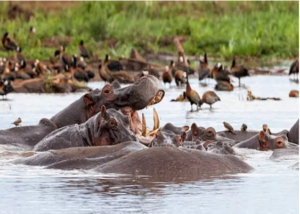
The crater’s ecology is equally diverse. The alkaline Lake Magadi draws tens of thousands of flamingos during peak months, turning the water’s edge a vivid pink. The Lerai Forest, a grove of yellow fever acacia trees, shelters elephant herds and leopards. The Gorigor Swamp provides year-round water for hippos and waterfowl. And the open grasslands — the Malanja Depression and the Serengeti Plains within the crater — support vast herds of wildebeest, zebra, and gazelle alongside the predators that follow them.
Why Choose a Private Safari at Ngorongoro?
The Ngorongoro Crater receives a significant volume of visitors, and the difference between a shared experience and a private one is felt immediately upon descent into the crater. Private safari arrangements unlock a qualitatively superior encounter in several interconnected ways. Uganda safaris offer unforgettable adventures through lush landscapes, diverse wildlife, stunning national parks, and unique opportunities to experience Uganda’s remarkable natural beauty.
Exclusive Vehicle Access: Private safaris operate with a dedicated 4×4 vehicle — typically a Land Cruiser or Land Rover — reserved solely for your group. This means no waiting for other passengers, no compromising on sighting positions, and the freedom to spend as long as you wish at any given encounter without pressure to move on.
Expert Private Guiding: A private guide is an entirely different proposition from a shared-group naturalist. Operating without the distractions of a mixed-ability group, a private guide can calibrate every element of the experience — pacing, depth of interpretation, specific wildlife interests — to exactly what you want from the day. The best private guides in Ngorongoro are walking encyclopaedias of ecological knowledge, and in a private context, that knowledge becomes fully available to you.
Flexible Timing: One of the most significant advantages of private safari is the ability to enter the crater as early as permitted and stay until the late afternoon gate-closing time. Wildlife activity at Ngorongoro is most intense at dawn and dusk — precisely the periods that shared group vehicles, constrained by pick-up schedules and lodge mealtimes, most commonly miss. Private safari clients can be at a predator sighting at first light and watch the same pride hunt through the golden hour of late afternoon.
Bespoke Experiences: Private safari operators at Ngorongoro can arrange exclusive crater-floor picnic lunches at designated scenic spots, walking experiences on the crater rim with a Maasai guide, private sundowners overlooking the caldera at dusk, and fly-camping arrangements for those seeking an even more immersive connection with the wilderness.
Wildlife Highlights of a Private Ngorongoro Safari
Black Rhinoceros: The crater is home to between 20 and 30 black rhinos — a small but critically significant population. These elusive, prehistoric-looking animals are most reliably spotted in the open grasslands of the Malanja Depression in the early morning. With a private guide, you can position your vehicle patiently and wait — something that shared vehicles, under time pressure, rarely do.
Lions: Ngorongoro’s lions are among the most studied and behaviourally distinctive in Africa. Isolated within the crater for generations, they have developed unique physical and social characteristics. Large, well-fed prides rest openly on the grasslands, and with a private vehicle, encounters of extraordinary length and intimacy are entirely possible.
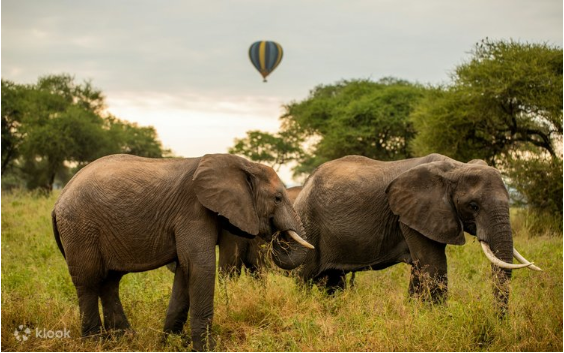
Elephants: The crater supports a resident elephant population, with large bull elephants — carrying some of the most impressive tusks remaining in Tanzania — frequently encountered in the Lerai Forest. A private guide will know the regular movement patterns of these individuals and can anticipate encounters that a standard tour would simply drive past.
Flamingos and Birdlife: Lake Magadi attracts large flamingo flocks, and the crater’s varied habitats support over 500 bird species. For birding enthusiasts, a private guide with ornithological expertise can transform a game drive into a world-class birding experience without sacrificing mammal sightings.
Leopard: The most elusive of the Big Five anywhere, leopards at Ngorongoro are spotted with greater frequency than in many other reserves, particularly in the fever tree woodlands near the crater rim. A private vehicle’s flexibility — the ability to stop and scan for extended periods — substantially increases leopard encounter rates.
The Crater Rim: An Overlooked Treasure
Most visitors to Ngorongoro focus exclusively on the crater floor and overlook the remarkable wilderness of the crater rim and the Ngorongoro Conservation Area beyond it. The rim itself sits at over 2,400 metres elevation, cloaked in montane forest rich with colobus monkeys, bushbuck, buffalo, and elephant. Walking trails along the rim offer a completely different perspective — the vast caldera spread below, the Serengeti plains stretching to the west, and the wild rim forest surrounding you.
Private safari itineraries can incorporate rim walks with armed Maasai ranger guides, visits to the Olmoti and Empakaai craters — lesser-visited volcanic calderas nearby — and cultural encounters with Maasai communities within the Conservation Area, providing a depth of experience that the crater floor alone cannot offer.
Key Takeaways
| # | Insight |
| 1 | Scale: Ngorongoro is the world’s largest intact volcanic caldera at 260 km², home to an estimated 25,000 large animals. |
| 2 | Big Five Reliability: The crater offers some of Africa’s most consistent Big Five sightings, including critically endangered black rhino. |
| 3 | Private Advantage: Exclusive vehicle, flexible timing, and expert private guiding transform the experience qualitatively. |
| 4 | Best Time to Visit: June through October (dry season) offers the clearest skies and best game viewing; January–March adds calving season wildlife from the adjacent Ndutu plains. |
| 5 | Altitude: The crater floor sits at 1,800 m; the rim at 2,400 m. Mornings are cool — pack layers even in the dry season. |
| 6 | Rhino Sightings: Black rhino are more reliably spotted here than almost anywhere else in Africa — best seen at dawn on the Malanja Depression. |
| 7 | Beyond the Floor: The crater rim, Olmoti, and Empakaai craters offer extraordinary wilderness experiences rarely included in standard itineraries. |
| 8 | Conservation Fees: Ngorongoro charges among the highest conservation fees in Tanzania — these fund critical wildlife protection and should be regarded as an investment, not an inconvenience. |
| 9 | Combined with Serengeti: Ngorongoro is ideally combined with a Serengeti safari for a comprehensive northern Tanzania wildlife experience. |
| 10 | Book in Advance: Private vehicle permits and crater descent slots are limited — reserve 12 months or more ahead for peak season travel. |
Q&A: Your Ngorongoro Crater Private Safari Questions Answered
Q: What makes a private safari at Ngorongoro fundamentally different from a group tour?
A: The difference is best understood through time and attention. A group tour operates on a fixed schedule, with a vehicle full of people with different interests, fitness levels, and patience thresholds. A private safari operates entirely on your terms — you linger at a rhino sighting for 45 minutes if you wish, you return to a lion pride at the same spot three times across the day, and your guide’s expertise is directed exclusively toward your interests and questions. The crater is the same; the experience is categorically different.
Q: How many vehicles are permitted in the crater at any one time, and does this affect the private safari experience?
A: The Ngorongoro Conservation Area Authority limits the number of vehicles descending into the crater each day, and conservation fees help manage visitor pressure. Private safari vehicles are subject to the same entry regulations as group vehicles, but the advantage lies in timing: private clients can descend at gate-opening time — before the main flow of lodge coaches — and position themselves at prime sighting locations ahead of the crowds. An experienced private guide knows precisely where to be and when.
Q: Is it possible to stay overnight on the crater floor?
A: No permanent overnight accommodation exists on the crater floor — all lodges and camps are positioned on the crater rim or beyond. This is a deliberate conservation policy to protect the crater’s ecology. However, the rim lodges — several of which rank among Africa’s finest safari properties — offer spectacular views directly into the caldera and are an integral part of the private Ngorongoro experience.
Q: Are black rhino sightings guaranteed on a private safari?
A: No wildlife sighting can be guaranteed, and responsible guides will never make such a promise. However, the probability of rhino sightings at Ngorongoro is significantly higher than in most other East African reserves, and a private guide’s ability to spend extended time in prime rhino habitat — without the pressure of a group schedule — materially improves the chances of an encounter. Many private safari guests leave Ngorongoro with multiple rhino sightings.
Q: What is the ideal length of time to spend at Ngorongoro on a private safari?
A: Two full days on the crater floor, combined with at least one rim walk or additional crater excursion, is the recommended minimum for a private safari. Three to four days allows for a complete exploration of the crater ecosystem across multiple times of day and weather conditions, as well as time to explore the broader Conservation Area including Olmoti, Empakaai, and Maasai cultural sites.
Q: How does Ngorongoro compare to the Serengeti for private safari purposes?
A: The two destinations complement each other perfectly and are ideally visited together. The Serengeti offers vast, open wilderness with unpredictable, wide-ranging wildlife — the antithesis of the enclosed, highly concentrated Ngorongoro experience. The crater delivers reliable, intimate encounters within a contained and visually spectacular setting. The Serengeti rewards patience and distance; Ngorongoro rewards depth and stillness. A private safari that encompasses both provides arguably the most complete wildlife experience in East Africa.
Conclusion
Ngorongoro Crater occupies a singular position in the hierarchy of the world’s great wild places. It is ancient beyond comprehension, ecologically complete in a way that few places on Earth can claim, and visually so extraordinary that the first descent into the caldera — that moment when the mist clears and the full scale of the crater floor reveals itself below — is a moment that stays with a traveler forever.
A Ngorongoro Crater private safari within this extraordinary setting elevates the experience from memorable to transformative. When the vehicle belongs to you alone, when the guide’s knowledge is directed entirely at your curiosity, and when the schedule bends to the rhythms of the wildlife rather than the constraints of a tour group, Ngorongoro stops being a destination to be checked off and becomes something else entirely — a relationship with a living, breathing ecosystem, experienced at the pace and depth it genuinely deserves.
The crater does not rush. Its lions rest in full view of the morning sun. Its rhinos move through the grasslands on schedules set long before any human arrives to watch them. Its flamingos turn the lake’s edge pink without any regard for the hour. A private safari is simply the most honest way to meet them — on their terms, in their time, in one of the most remarkable places remaining on this planet.