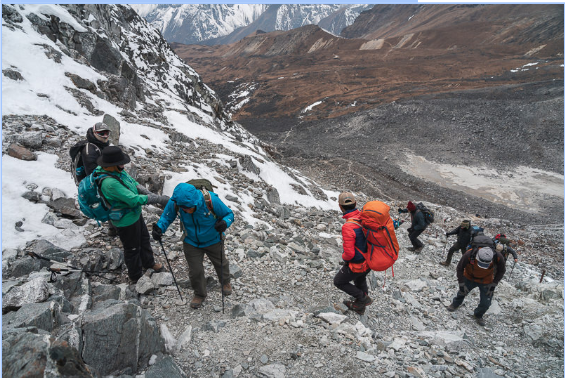

The Everest region is home to some of Nepal’s most spectacular trekking routes, offering dramatic Himalayan peaks, Sherpa villages, Buddhist monasteries, glaciers, and high-altitude mountain passes. For experienced trekkers looking for a more demanding adventure than the classic Everest Base Camp route, the Three Pass Trek’s Everest Region provides an opportunity to explore the Khumbu from several different perspectives.
Another important high-altitude route is Chola Pass treks, which cross the challenging Cho La Pass while connecting major destinations in the Everest region. Both experiences require good physical preparation, appropriate acclimatization, and careful planning because they reach elevations well above 5,000 meters.
What Is the Three Pass Trek in the Everest Region?
The Three Pass Trek is a challenging circuit through the Everest region that crosses three major high-altitude passes:
- Renjo La
- Cho La
- Kongma La
The route also commonly incorporates major Everest-region destinations such as Namche Bazaar, Gokyo Valley, Everest Base Camp, and Kala Patthar.
Unlike the standard Everest Base Camp trek, the Three Pass route takes trekkers away from the main trail and into more remote and demanding mountain terrain.
The journey combines high passes, glacial lakes, valleys, glaciers, and spectacular views of some of the world’s highest mountains.
Major Highlights of the Three Pass Trek
The Three Pass Trek’s Everest Region offers a wide variety of landscapes and experiences.
Key highlights include:
- Mount Everest
- Lhotse
- Makalu
- Cho Oyu
- Ama Dablam
- Gokyo Lakes
- Everest Base Camp
- Kala Patthar
- Renjo La Pass
- Cho La Pass
- Kongma La Pass
- Sherpa villages
- Buddhist monasteries
- Khumbu Glacier
The route is particularly appealing to trekkers who want to explore more remote areas of the Everest region.
The Three High Passes
Renjo La Pass
Renjo La is generally crossed while traveling between the Namche region and Gokyo Valley.
The ascent can be demanding, but the views from the pass can include several major Himalayan peaks and the surrounding high-altitude landscape.
Cho La Pass
Cho La connects the Gokyo Valley with the Everest Base Camp side of the Khumbu region.
The pass reaches approximately 5,420 meters and can involve snow and icy conditions depending on the season.
Kongma La Pass
Kongma La is another challenging crossing on the Three Pass route.
At approximately 5,535 meters, it is the highest of the three passes and requires careful preparation and suitable weather conditions.
Chola Pass Treks
Chola Pass treks focus on crossing Cho La and exploring the surrounding Everest region.
Cho La is located between the Gokyo Valley and the Khumbu Valley, making it an important connection between two popular trekking areas.
A Cho La itinerary can be combined with Everest Base Camp, Gokyo Lakes, or both, depending on the trek duration and route.
Typical Chola Pass Trek Route
A typical itinerary may begin with a flight from Kathmandu to Lukla and then follow the established trail toward Namche Bazaar.
The route can continue through:
- Namche Bazaar
- Dole
- Machhermo
- Gokyo
- Cho La
- Dzongla
- Lobuche
- Everest Base Camp
- Gorak Shep
- Kala Patthar
The exact order can vary depending on the chosen itinerary.
Gokyo Lakes
The Gokyo Valley is one of the major highlights of Chola Pass treks.
The valley contains a series of beautiful glacial lakes surrounded by high Himalayan peaks.
Trekkers may also climb Gokyo Ri, a viewpoint offering panoramic views of the surrounding mountains.
The peaceful setting of the Gokyo Valley provides a contrast to the busier sections of the Everest Base Camp route.
Cho La Pass Crossing
Crossing Cho La is one of the most demanding sections of the trek.
The trail climbs steeply toward the pass, and conditions may include snow, ice, loose rock, and strong winds.
Trekkers generally cross the pass early in the day when weather and visibility are often more favorable.
Because conditions can change quickly, the crossing should be attempted only when the route is considered suitable by experienced local guides.
Difficulty Level
The Three Pass Trek is considered a challenging high-altitude trekking route.
The difficulty comes from a combination of:
- High elevation
- Long walking days
- Steep ascents and descents
- Remote terrain
- Changing weather
- Glacier and snow conditions
- Multiple high-pass crossings
Chola Pass treks can also be demanding, particularly when the route is combined with Everest Base Camp and Gokyo Valley.
Previous high-altitude trekking experience can be helpful, although individual fitness and preparation remain important factors.
Altitude and Acclimatization
Altitude management is essential on both routes.
The Three Pass Trek includes multiple elevations above 5,000 meters, so the itinerary should include appropriate acclimatization days.
Travelers should walk at a steady pace, drink sufficient water, and avoid unnecessary rapid elevation gains.
Symptoms such as severe headache, dizziness, nausea, unusual fatigue, confusion, or difficulty breathing should be taken seriously.
Anyone developing significant altitude-related symptoms should immediately inform their guide and descend if advised.
Best Time for Three Pass and Cho La Treks
Spring and autumn are traditionally considered the main trekking seasons in the Everest region.
Spring
March to May generally offers improving weather, warmer daytime temperatures, and seasonal flowers at lower elevations.
Autumn
September to November is popular for generally stable weather and clear mountain views.
Winter
Winter can bring significant snow and freezing temperatures, particularly around the high passes. Pass crossings may become difficult or temporarily inaccessible.
Monsoon
June to August brings rain and cloud cover at lower elevations. Lukla flights and trail conditions can also be affected by weather.
Current mountain conditions should always be checked before starting a high-pass trek.
Accommodation and Meals
Tea houses and trekking lodges provide accommodation along most established routes.
Facilities become increasingly basic at higher and more remote locations.
Typical meals include:
- Dal bhat
- Noodles
- Rice
- Soups
- Vegetables
- Eggs
- Bread
- Potatoes
- Tibetan-style dishes
Trekkers should carry high-energy snacks for long trekking days.
What to Pack
Because the Three Pass and Cho La routes reach high elevations, packing appropriate equipment is important.
Recommended items include:
- Waterproof trekking boots
- Warm insulated jacket
- Thermal base layers
- Fleece layers
- Waterproof jacket and trousers
- Warm gloves
- Hat
- Sunglasses
- Sunscreen
- Trekking poles
- Headlamp
- Sleeping bag
- Water bottles
- Water purification method
- Personal medication
- Basic first-aid supplies
- Backpack or duffel bag
The exact equipment should be adjusted according to the season and current conditions.
Choosing Between the Three Pass Trek and Cho La
The choice depends on the type of experience a traveler wants.
Three Pass Trek
The Three Pass route is suitable for trekkers seeking a comprehensive and challenging circuit through the Everest region.
It provides opportunities to cross three major mountain passes and visit both Gokyo and Everest Base Camp areas.
Cho La Trek
A Cho La itinerary can provide a more focused high-altitude experience.
It can be combined with Gokyo Lakes and Everest Base Camp while requiring fewer major pass crossings than the full Three Pass route.
Both routes require good preparation and should be planned around weather and acclimatization.
Responsible Trekking
The Everest region is environmentally sensitive and culturally important.
Trekkers can help preserve the region by:
- Reducing plastic waste
- Carrying reusable water bottles
- Staying on established trails
- Respecting monasteries and prayer sites
- Following local customs
- Avoiding unnecessary disturbance of wildlife
- Supporting local tea houses and businesses
- Taking personal waste back when appropriate
Responsible tourism helps protect the region for future generations.
Key Points to Remember
- The Three Pass Trek’s Everest Region is a challenging circuit involving Renjo La, Cho La, and Kongma La.
- Chola Pass treks focus on crossing Cho La and can be combined with Gokyo Lakes and Everest Base Camp.
- The Three Pass route reaches elevations above 5,500 meters.
- Cho La is approximately 5,420 meters high.
- Kongma La is approximately 5,535 meters high.
- Gokyo Lakes and Gokyo Ri are major attractions on routes through the Gokyo Valley.
- High-altitude acclimatization is essential.
- Spring and autumn are traditionally popular trekking seasons.
- Snow and ice can make high-pass crossings considerably more difficult.
- Weather can change rapidly in the Everest region.
- Good physical preparation and appropriate equipment are essential.
- Experienced local guides can provide valuable assistance with route conditions, weather, and altitude management.
- Responsible trekking helps protect the natural and cultural heritage of the Everest region.
Conclusion
The Three Pass Trek’s Everest Region offers a demanding and comprehensive Himalayan adventure for trekkers who want to explore beyond the standard Everest Base Camp route. With three major high-pass crossings, Gokyo Lakes, Everest Base Camp, and spectacular mountain scenery, the journey provides a diverse experience across the Khumbu region.
Chola Pass treks offer another challenging option, connecting the Gokyo and Everest Base Camp areas through the dramatic Cho La Pass. The route can be adapted to include major destinations such as Gokyo Lakes, Kala Patthar, and Everest Base Camp.
Both journeys require careful planning, appropriate acclimatization, suitable equipment, and attention to changing mountain conditions. With responsible preparation and experienced local support, these high-altitude routes can provide a memorable and rewarding experience in the Everest region.