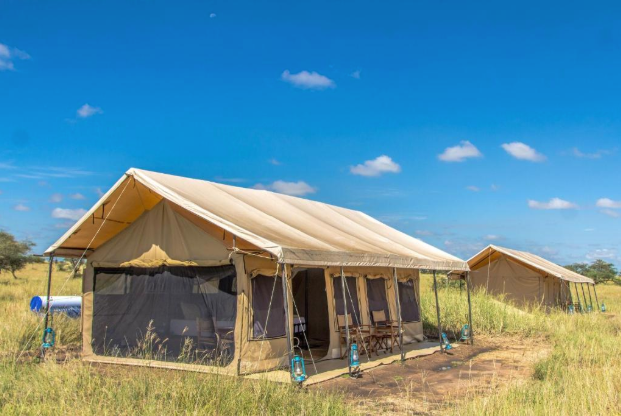

There is a particular kind of quiet on the Serengeti plains at night. It is not silence. It is the low rumble of a distant lion, the whoop of a hyena, and the rustle of canvas in a warm breeze. A Serengeti tented camp puts you inside that soundscape, separated from the wilderness by a few millimetres of fabric and a lot of thoughtful hospitality.
This guide explains what a tented camp is, how the main camp styles differ, where to stay, when to travel, and how to choose the right camp for your safari.
What Is a Serengeti Tented Camp?
A Serengeti tented camp is a safari lodging made up of canvas tents, usually raised on wooden platforms, set inside or beside Serengeti National Park in northern Tanzania. Despite the word “tent,” the experience ranges from simple and rustic to extremely luxurious.
Most tented camps share a few features:
- Walk-in tents with real beds, linen, and furniture
- En-suite bathrooms with flush toilets and hot-water showers, often at the back of the tent
- Private verandas for watching wildlife from your chair
- A central mess tent for meals, drinks, and evening gatherings
- Low-impact design, with solar power, filtered water, and minimal permanent structures
The appeal is closeness. Hotels wall you off from the landscape, while a tent lets you hear and smell it. Camps are also unfenced in most cases, so wildlife may pass through at night, and staff will escort you to and from your tent after dark.
The Three Main Types of Tented Camp
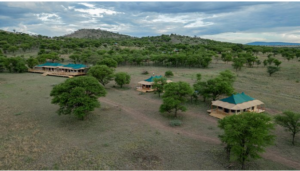
1. Permanent Tented Camps
Permanent camps stay in one location year-round. The tents are large, often with hardwood floors, proper bathrooms, and sometimes plunge pools or private decks. Because they are fixed, they can offer more comforts, such as spa treatments, curated wine lists, and reliable Wi-Fi in common areas.
They suit travellers who want predictable comfort and a base from which to take game drives. The trade-off is that the wildlife may move away from the camp during parts of the year.
2. Seasonal (Mobile) Camps
Mobile camps are the classic Serengeti experience. Operators move the camp two or three times a year to follow the Great Migration, so you wake up near the herds rather than driving hours to find them. The setup is lightweight, but top operators still provide comfortable beds, bucket or safari showers, and excellent food cooked in a camp kitchen.
They are ideal for travellers whose priority is wildlife density. Facilities are simpler than at a permanent luxury camp, though high-end mobile camps are very comfortable.
3. Budget and Mid-Range Camps
Not every tented camp is a luxury product. Simpler camps offer smaller tents, shared or basic bathrooms, and straightforward meals at a much lower price. Public campsites inside the park serve overlanders and budget safaris, where guests sometimes bring or rent their own tents.
These camps work for first-time safari-goers on a budget, provided you accept fewer amenities and sometimes more distance from the best wildlife areas.
Where to Stay: The Serengeti’s Main Regions
The Serengeti covers roughly 14,750 square kilometres, so location matters. Where your camp sits shapes what you see.
Central Serengeti (Seronera). This is the most accessible area and offers excellent year-round wildlife, especially predators. Leopards, lions, and cheetahs are commonly seen here, and the open plains and rocky outcrops (kopjes) make for good viewing. It is a safe choice if you are visiting outside the migration’s peak river-crossing period.
Northern Serengeti. The north is quieter and more remote, and it is where the Mara River crossings take place, typically between July and October. Camps here deliver dramatic scenes of wildebeest and zebra facing crocodile-filled waters.
Southern Serengeti and Ndutu. From roughly December to March, the herds gather on the short-grass plains for calving season. Tens of thousands of calves are born in a short window, which also draws predators. Camps here often operate seasonally.
Western Corridor. The Grumeti River region offers riverine forest, crocodiles, and, around May to July, the migration’s western movement. It is less crowded than the centre.
When Is the Best Time to Visit?
Serengeti wildlife is superb year-round, but your priorities determine the ideal month.
| Season | What to Expect |
| January–March | Calving season in the south; large herds and active predators |
| April–May | Long rains; lush scenery, fewer visitors, lower rates, some roads difficult |
| June–October | Dry season; excellent visibility, northern river crossings (July–October) |
| November–December | Short rains; the herds begin moving south again, with green landscapes and good birding |
Dry months generally bring the most reliable game viewing because animals gather around water and vegetation things. The green season offers value and atmosphere, though camps in some areas may close.
What a Typical Day Looks Like
Life at a tented camp follows the rhythm of the animals.
Dawn. A gentle wake-up call, often with tea or coffee delivered to your tent. Early morning is the best time for game viewing, when predators are still active and the light is soft.
Morning game drive. You head out in a 4×4 safari vehicle with an expert guide. Many camps offer a bush breakfast in the field.
Midday. Return to camp for lunch and rest. Heat peaks in the middle of the day, so most animals rest too. Many guests read, nap, swim if the camp has a pool, or watch wildlife from the veranda.
Afternoon drive. Activity picks up again as temperatures fall. Some camps add walking safaris, cultural visits, or hot-air balloon flights (usually arranged in the central Serengeti).
Evening. Sundowners at a scenic spot, then dinner by lantern or around a campfire. Guides share stories, and the night sky, free from light pollution, is spectacular.
How to Choose the Right Camp
Before you book, think through these questions:
- What is your main goal? If it is the river crossing, choose the north from July to October. For calving, head south in the early months of the year. For predators and reliability, choose the centre.
- What is your budget? Prices vary widely, from simple camps to ultra-luxury properties. Check what is included, such as meals, drinks, game drives, park fees, and transfers.
- How much comfort do you need? Decide whether you want hot showers on demand, a plunge pool, or are happy with a simpler setup.
- How remote do you want to be? Smaller camps with fewer tents offer more intimacy, while larger ones provide more facilities.
- How will you travel? Some camps are reached by road, others by light aircraft to a nearby airstrip, which saves time.
- Does the camp prioritise sustainability? Look for solar power, water conservation, local employment, and community involvement.
Booking well in advance matters, particularly for peak periods, because the best camps are small and fill early.
Responsible Travel and Safari Etiquette
A tented camp puts you in a real ecosystem, so responsible behaviour matters.
- Follow your guide’s instructions, especially at night and around camp.
- Never walk alone after dark, and keep tents zipped to keep out insects and curious animals.
- Keep noise down and give wildlife space.
- Choose camps that employ and support local communities and manage waste and water carefully.
- Pack light, soft-sided luggage, particularly if you are flying between camps.
Your park fees and camp payments help fund conservation and support the people who live alongside the wildlife.
Conclusion
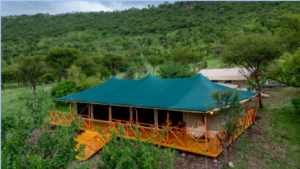
A Serengeti tented camp is one of the most immersive ways to experience East Africa. It combines the comfort of proper beds and good food with the thrill of sleeping in the middle of the savannah, with lions calling in the distance and an enormous sky overhead. Whether you pick a luxury permanent camp, a seasonal mobile camp that follows the Great Migration, or a simple budget option, the key is to match the camp’s location and style to your priorities, budget, and travel dates. Plan early, choose your region and season carefully, and you will come home with memories that few other travel experiences can match.
Key Takeaways
- A Serengeti tented camp offers canvas accommodation that ranges from budget to ultra-luxury, usually with real beds and en-suite bathrooms.
- There are three main types: permanent camps, seasonal mobile camps that follow the migration, and budget or public campsites.
- Location drives the experience: the south for calving, the north for river crossings, the centre for year-round predators, and the west for the Grumeti River.
- The dry season (June–October) is the most reliable for game viewing, while the green season offers value and fewer crowds.
- Book early, check what is included, and choose camps with strong sustainability and community practices.
Frequently Asked Questions (FAQ)
- Is it safe to stay in a tented camp in the Serengeti?
Yes. Camps follow strict safety procedures, including escorts after dark, trained staff, and clear rules for guests. Wildlife can pass through unfenced camps, but incidents are rare when guests follow instructions. - Do tented camps have proper bathrooms?
Most mid-range and luxury camps have en-suite bathrooms with flush toilets and hot-water showers. Mobile and budget camps may use simpler safari-style showers, and some basic campsites have shared facilities. - How much does a Serengeti tented camp cost?
Rates vary enormously by camp type, season, and location. Budget camps cost far less than luxury ones, and peak season is more expensive. Always check whether meals, drinks, activities, and park fees are included. - What is the best month to visit?
It depends on your goal. July to October is best for Mara River crossings in the north, January to March for calving in the south, and June to October overall for dry-season visibility. - What is the difference between a mobile camp and a permanent camp?
A permanent camp stays in one place year-round and usually offers more facilities. A mobile camp moves seasonally to stay close to the migration, with simpler but still comfortable amenities. - Do I need to bring my own gear?
No. Camps provide beds, bedding, and meals. Bring neutral-coloured clothing, layers (mornings and evenings can be cool), sun protection, a hat, binoculars, and a camera. - Can children stay at tented camps?
Many camps welcome children, though some set minimum ages for safety reasons. Check the camp’s policy, and ask about family tents and child-friendly activities. - How do I get to the Serengeti?
Most visitors drive from Arusha or fly into airstrips within the park. Flying saves time and is common for travellers visiting several camps.