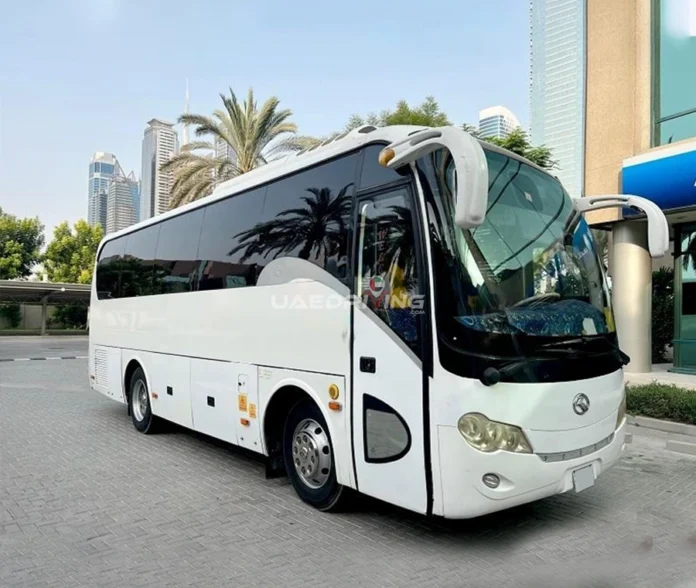

For businesses operating in Dubai, employee transportation is more than an everyday logistical requirement. It directly affects punctuality, workforce coordination and the overall efficiency of business operations.
Companies with employees travelling from different residential communities often face recurring challenges. Some workers depend on public transportation, others arrange private rides, and employees working different shifts may struggle to find convenient travel arrangements.
These problems become more noticeable when a company operates from an industrial area, business park, warehouse or location that is not easily accessible through a single public transport connection.
A properly organized employee transportation system can reduce these difficulties while giving businesses greater control over daily commuting arrangements.
Why Employee Transportation Becomes Difficult to Manage
The problem usually starts when employee numbers increase or when a business expands its operational locations.
For example, a company may have 35 employees working at the same facility but living across several residential communities. Allowing everyone to arrange their own transportation creates different arrival times and makes attendance coordination more difficult.
Other challenges include:
- Employees arriving late because of multiple transport changes.
- Inconsistent pickup arrangements across different shifts.
- Higher coordination requirements when several vehicles are involved.
- Difficulties managing transportation during peak working hours.
- Additional planning for employees attending temporary assignments.
Instead of treating these as individual commuting problems, businesses can approach transportation as a centralized operational requirement.
Designing an Employee Transportation Route That Works
An effective transportation plan should begin with employee locations rather than choosing a vehicle immediately.
HR departments and operations managers can start by grouping employees according to their residential areas. This helps identify common pickup points and avoid unnecessary route detours.
For example, employees living in nearby communities may be able to use the same boarding location rather than requiring individual doorstep pickups.
The next step is to consider:
Shift schedules: Morning, evening and overnight employees may require separate transportation arrangements.
Travel duration: A route should not create excessively long journeys for employees collected at the beginning of the trip.
Pickup frequency: Businesses with multiple shifts may need recurring transportation rather than occasional bookings.
Passenger numbers: The vehicle should accommodate actual attendance requirements without compromising the planned seating arrangement.
For companies searching for bus rental in Dubai, these details are important when discussing an ongoing employee transportation requirement with a provider.
Choosing the Right Vehicle for Workforce Transportation
The vehicle should match the size of the workforce and the structure of the route.
A smaller group may be better accommodated through a minibus, particularly when employees work at a specific office or facility.
Larger organizations may require a higher-capacity vehicle. A 50 seater bus rental can be considered when a substantial number of employees follow the same schedule and travel between common locations.
However, passenger capacity is only one consideration. Businesses should also evaluate luggage requirements, boarding locations, journey duration and whether different employee shifts need separate arrangements.
A practical transportation plan should be based on actual operational requirements rather than selecting a vehicle simply because it has more seats.
Why Centralized Transportation Can Improve Workplace Coordination
When employees share a planned transportation arrangement, businesses can simplify several aspects of daily operations.
Managers can work with a defined pickup schedule, communicate changes through a central contact and reduce the uncertainty associated with multiple individual journeys.
This is particularly useful for:
- Construction and infrastructure companies.
- Warehouses and distribution facilities.
- Hospitality businesses.
- Industrial operations.
- Large office teams.
- Companies organizing temporary workforce movements.
A group bus for rent in Dubai can support these requirements when employees need to travel together according to a coordinated schedule.
Planning for Changing Workforce Requirements
Employee transportation should not be designed around one fixed passenger count without considering operational changes.
New employees may join, existing workers may relocate, and business operations may introduce additional shifts.
Companies should periodically review pickup points and passenger numbers to determine whether their current transportation arrangement remains suitable.
Maintaining an updated employee list also helps avoid unnecessary stops and makes daily boarding more organized.
Working With a Transportation Provider
Businesses should communicate their requirements clearly before confirming a transportation arrangement.
Useful information includes the number of employees, residential pickup areas, workplace address, shift timings, expected travel frequency and any special scheduling requirements.
Gulf Bus Rental offers bus rental solutions for customers arranging passenger transportation in Dubai. Businesses evaluating workforce transportation can explore its services at Gulf Bus Rental and discuss an arrangement based on their operational needs.
Final Thoughts
Employee transportation is an important part of maintaining organized business operations in Dubai. A suitable vehicle, practical pickup locations and a realistic timetable can help businesses reduce commuting complications.
Rather than waiting for repeated transport issues to affect daily operations, companies should establish a structured employee transportation plan that can adapt as their workforce grows.